The third shadow hits my boot heel right outside Miller’s hardware awning, and I know I’ve already waited too long to cross the plaza.
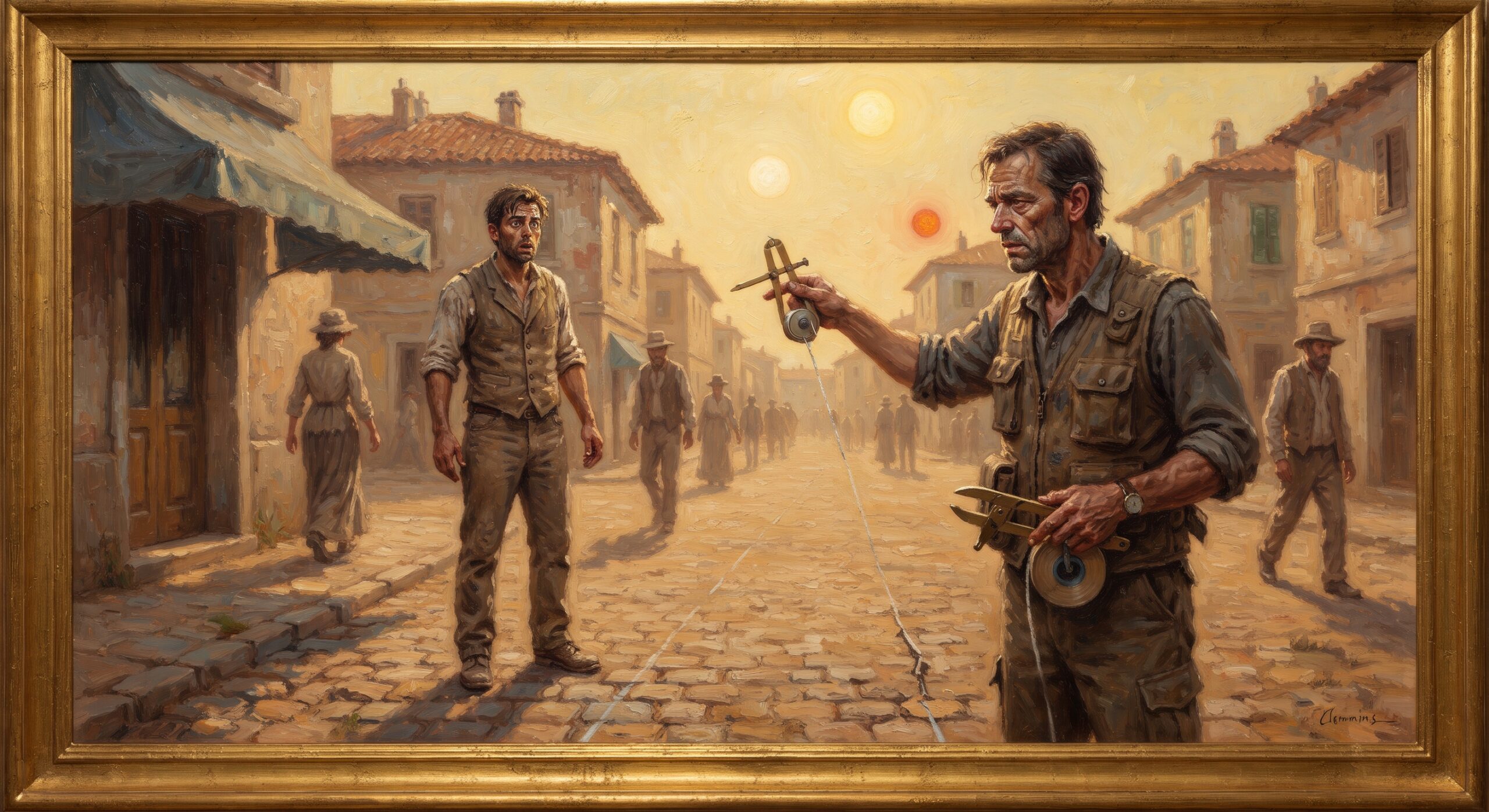
Above the terracotta roofs, the Great Amber and the Pale Sister are stacked nearly shoulder-to-shoulder in a sky the color of steeped chamomile, while the Red Ember squats low behind the water tower like a coal that refuses to die. Three suns. Three overlapping bands of shade bleeding across the chalk-stone street. A dull day in Clemmins—the kind where the wind-vanes rattle dry on the eaves and nobody moves faster than a mule in August.
I only came down to Main Street for two things: a tin of shutter-resin and a cold cup of salted lemon-barley water before Double-Noon peaks. Simple enough. Except Arthur Vance, the senior Shade-Warden, is standing directly in front of Miller’s doorway with a brass caliper in one hand and a roll of chalk-string in the other.
“Morning, Bob,” Arthur says, not looking up from the cobblestones. He stretches the chalk-string tight between the edge of Miller’s canvas awning and the gutter stone. “You’re walking heavy today.”
“Blame the dust,” I say, stopping just inside the cool blue-grey wedge of his shade-line. Stepping out of direct light feels like dipping a hand into well water. “You measuring for a tax, Arthur, or did Miller forget to crank his canvas at First-Light?”
“Awning’s fine.” Arthur snaps the string. A thin white line settles onto the stone, cutting two inches inside Miller’s usual porch boundary. “Ember’s running fast this cycle. Seven minutes ahead of the Magistracy almanac.”
I blink at him. “Suns don’t run fast, Arthur.”
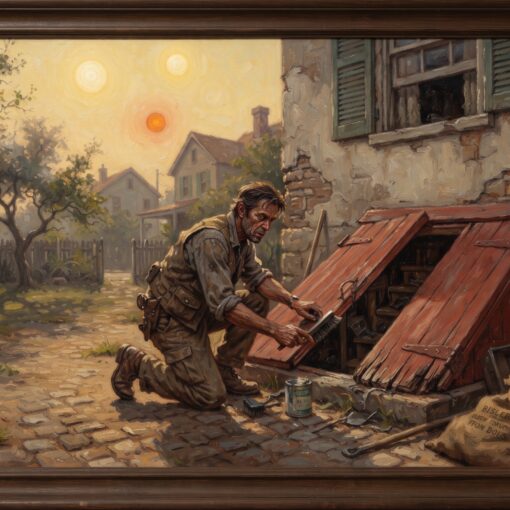
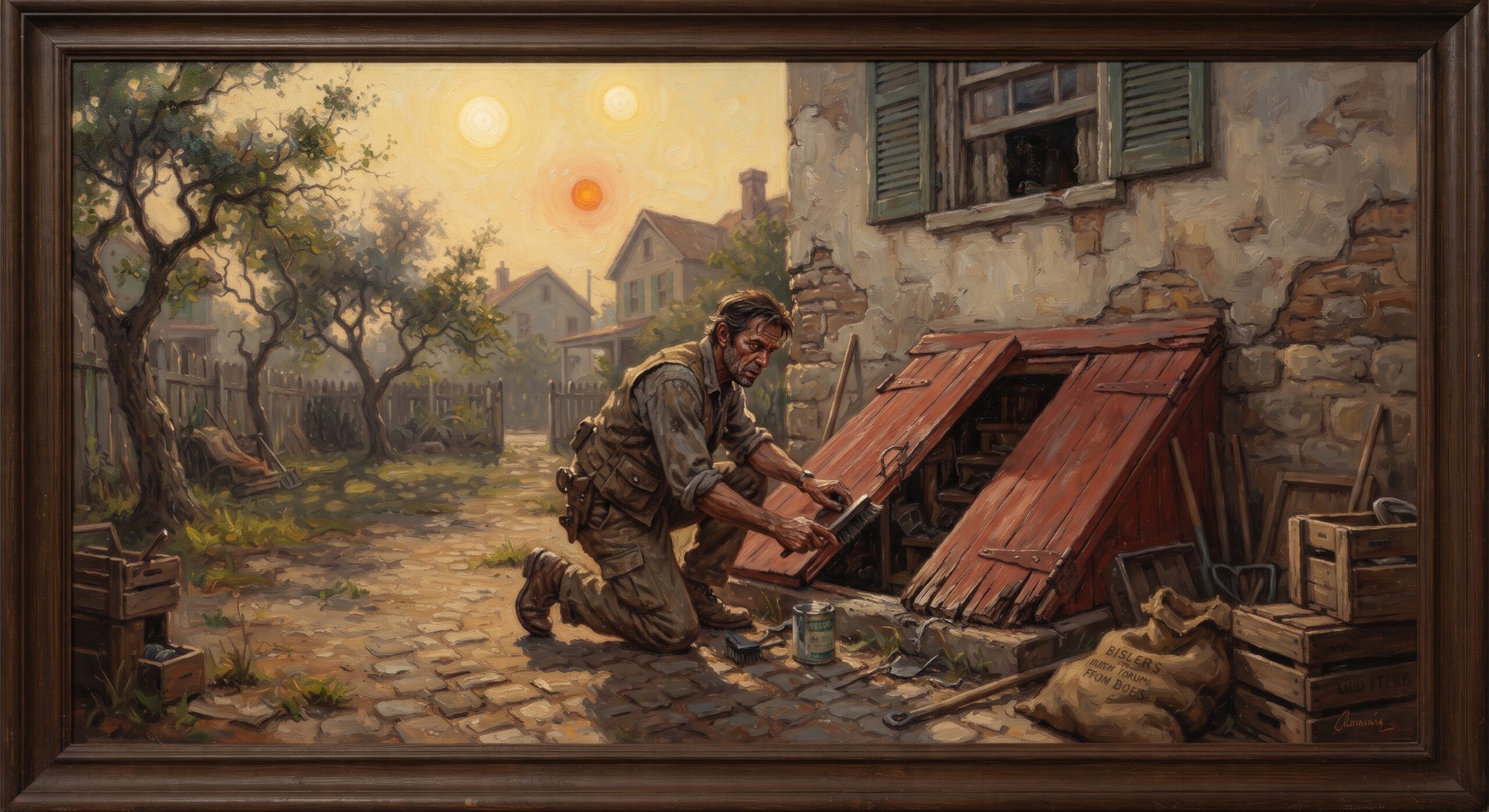
“Tell that to the cistern gauges.” He finally looks up, squinting against the glare bouncing off my collar. His jaw is tight, the skin under his eyes bruised with the kind of gray fatigue you only see right before the nineteen-day Dark. “Council’s calling an early shutter-check at sixth shadow. Tell your neighbor on Elm to clear his cellar stairs.”
“Sixth shadow isn’t for four days.”
“It is if the Ember keeps sliding.” Arthur coils his string with sharp, clipped jerks of his wrist, already turning toward the bakery next door. “Get your resin, Bob. And buy two tins instead of one.”
He walks off without waiting for an answer, his boots kicking up little puffs of yellow-ochre dust that hang motionless in the thick air.
I stand there on the chalk line for a long second, the warmth of the Great Amber prickling the back of my neck. Inside Miller’s shop, the bell over the door clatters as someone shoves past the counter—not browsing, grabbing. Nobody in Clemmins hurries unless water is rationing or the Dark is coming early, and the almanac hanging in my own kitchen says we still have nearly a week of lazy afternoons left.
My throat goes dry, and it has nothing to do with the heat. If the Ember is really seven minutes ahead, the Magistracy isn’t measuring awnings for taxes—they’re checking which cellars can seal airtight before the sky goes black.
I push open Miller’s door, skip the lemon-barley kiosk altogether, and head straight for the back shelf where they keep the heavy-grade shutter-resin and the iron bolts.