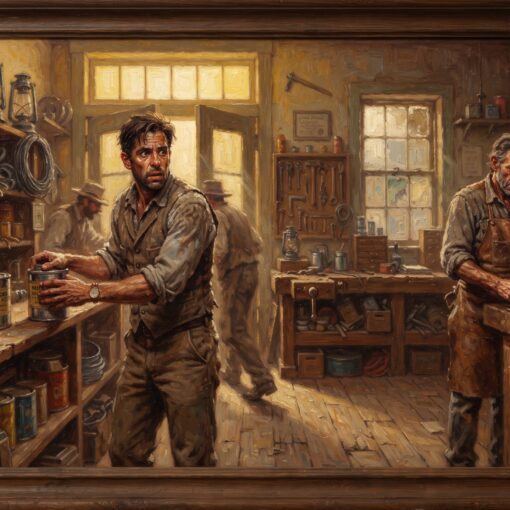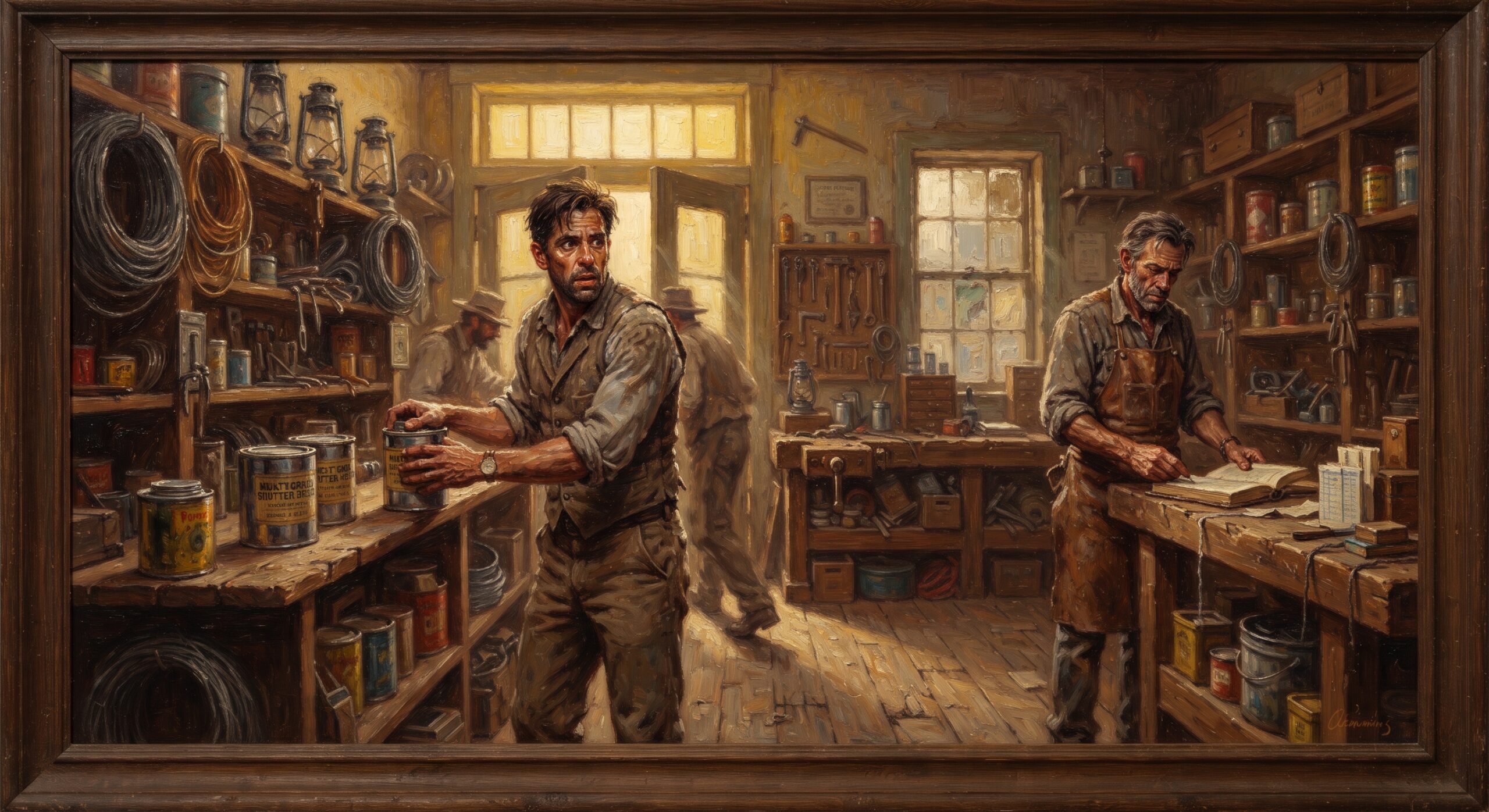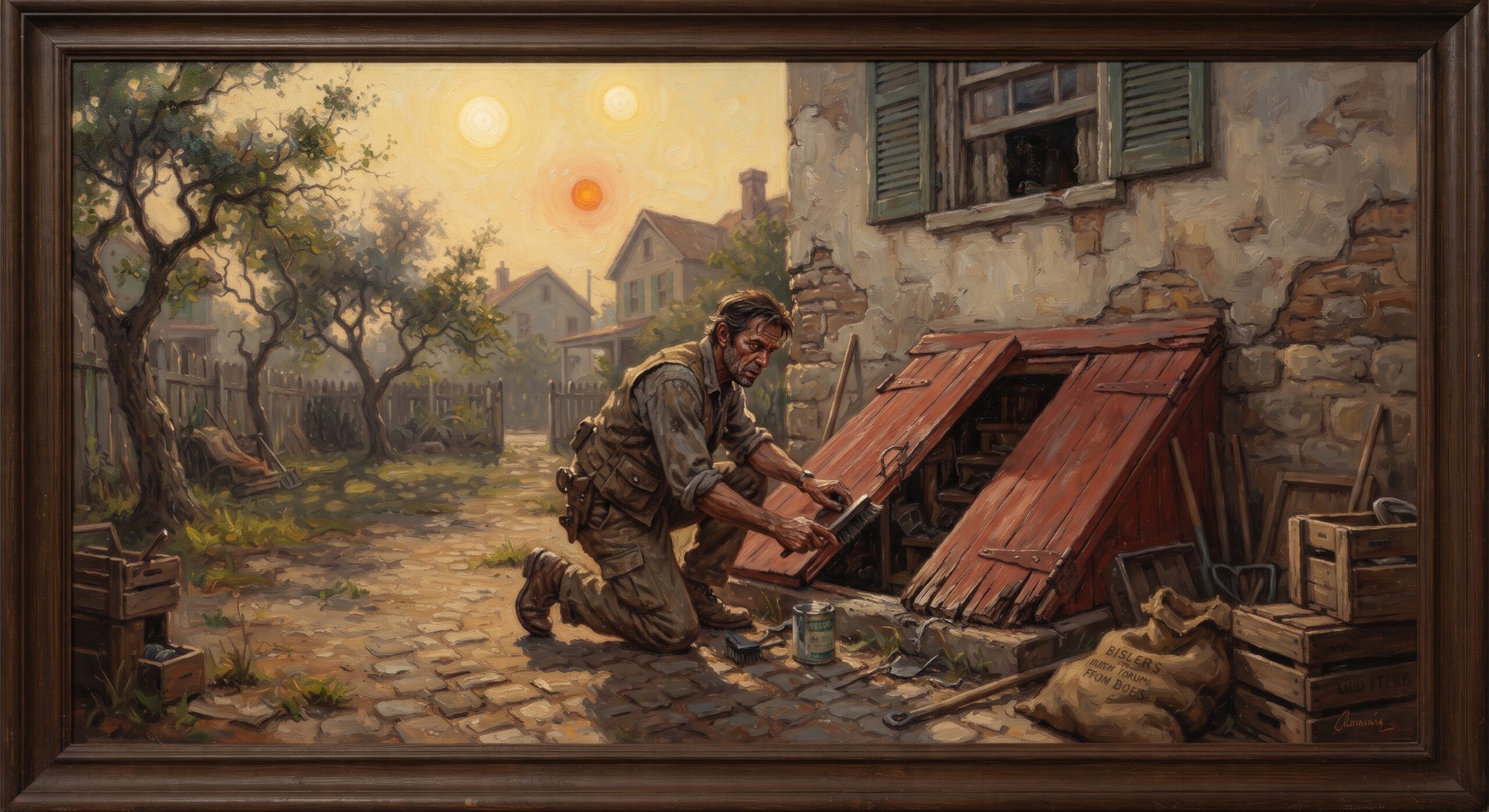
By the time I clear the bakery corner with Miller’s burlap sack thumping against my shoulder blades, three different shopkeepers are cranking their canvas awnings down in dry, frantic ratchets. Nobody stops to trade gossip in the blue-grey shade-lines. Even the boy at the lemon-barley kiosk is stacking his wooden cups into a crate, sloshing half a jug of salted water onto the chalk-stone without bothering to wipe it up.
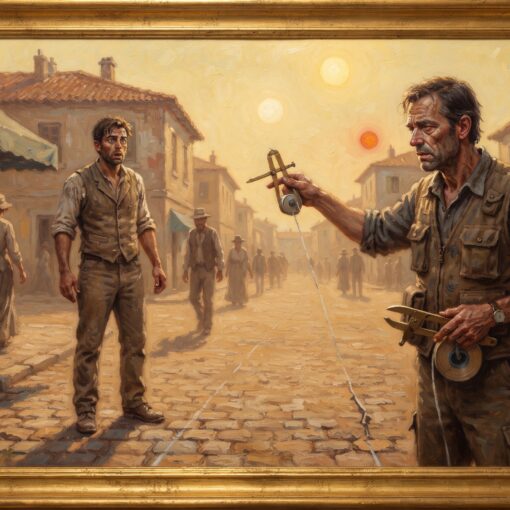
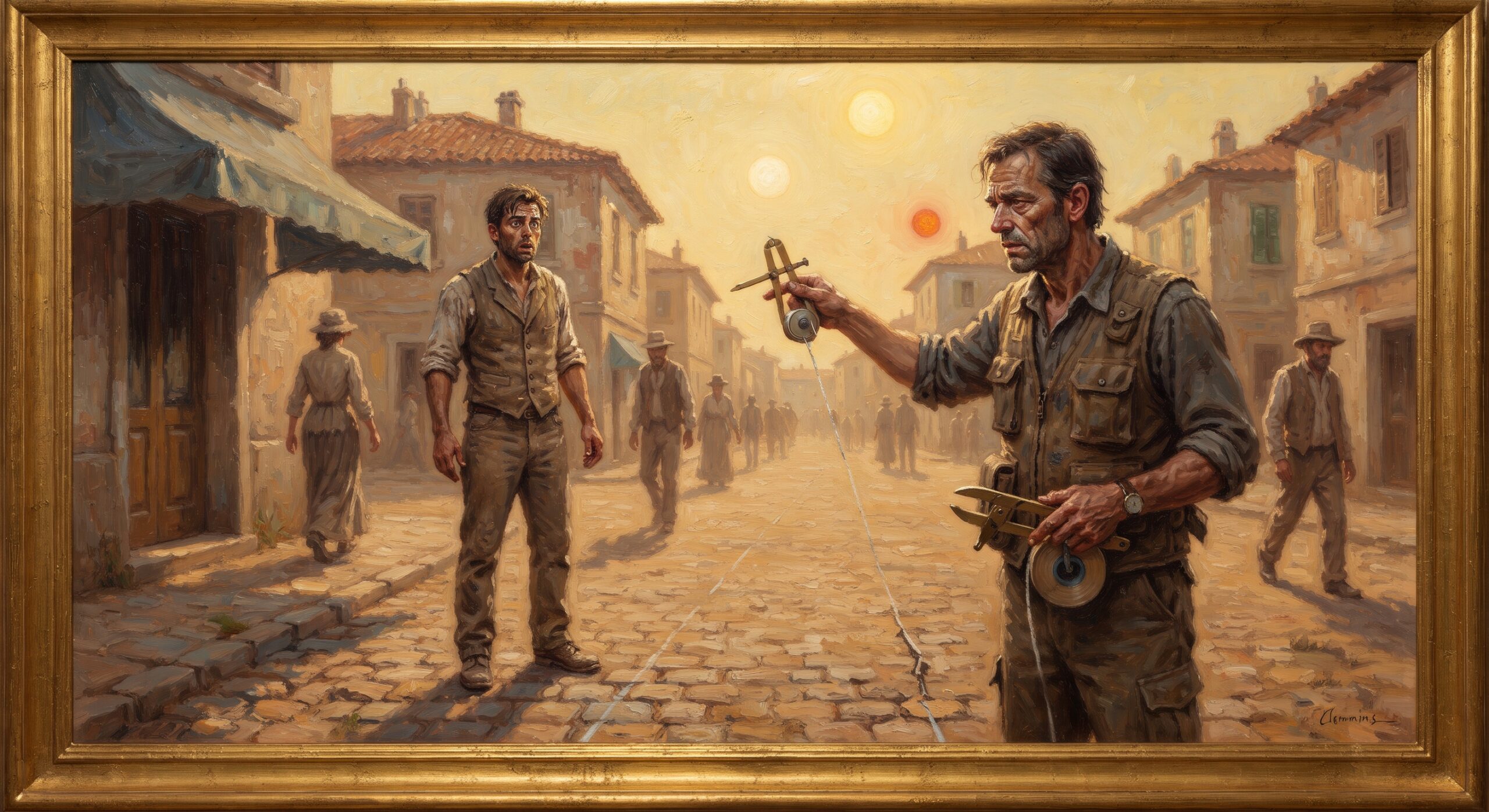
Overhead, the Great Amber and the Pale Sister still look blindingly ordinary in the steeped-chamomile sky, but the Red Ember has crept a finger’s width closer to the water tower than it was twenty minutes ago. Four distinct shadow-edges now fan out from every hitching post—three clean, one blurred at the rim like ink bleeding on wet paper.
I cut down Sycamore Alley to shave four minutes off the walk to Elm Street. Grit crunches under my heels. The burlap sack drags heavy on my collarbones, the iron bolts clinking dull against the tins of shutter-resin with every step.
Elm Street is quieter, tucked behind the limestone ridge where the afternoon wind dies, which somehow makes it worse. Half the front windows on the block still have their louvers propped open to catch the breeze.
I take my neighbor’s porch steps two at a time and rap hard on the warped pine door. Walter’s knees make him slow, and when he’s working his radio bench in the back room, he wouldn’t hear a wagon axle snap on the curb.
After a long pause, the latch clicks. Walter pulls the door open three inches, squinting out with a magnifying visor pushed up into his thinning white hair. “Bob? You’re early for supper.”
“Council moved the shutter-check up to sixth shadow,” I say, keeping my voice level so I don’t sound like the folks panicking on Main. “Ember’s eleven minutes ahead of the almanac. Miller says it’s a pinched alignment—cold snap, not just a normal Dark.”
Walter’s hand tightens on the edge of the door. The color drains out of his cheeks until the liver spots stand out sharp against his skin. “Eleven? My cellar stairs are stacked with crates from the rail spur.”
“I’ll help you clear them once I check my own latch,” I tell him. “And I had Miller hold a tin of heavy-grade resin under his counter with your name on it. Don’t forget your chimney flue before sixth shadow.”
Walter stares at me for a beat, his jaw working, then nods once—sharp and grateful. “Obliged, Bob. I’ll start on the top landing now.”
I cross the gravel strip between our houses at a jog, already unshouldering the burlap sack as I round the back corner of my own porch. My cellar bulkhead sits flush against the stone foundation under the kitchen eaves, painted faded barn-red to match the trim.
I kneel on the warm flagstone, grip the iron ring, and haul up.
The left leaf lifts six inches and stops dead with a metallic screech that sets my teeth on edge.
I drop to one knee and peer into the gap. The lower iron strap-hinge hasn’t just rusted—the limestone sill beneath it has shifted, pinching the bottom flange tight against the masonry while a finger-wide split runs straight through the dried caulking along the frame. Even if I force the doors shut, cold air will pour through that seam like water through a cracked bucket.
Above the roof ridge, the blurred fourth shadow-edge stretches an inch longer across the yard.
I pull the heavy brush and a tin of resin out of the burlap sack, wedge my boot against the stone sill to pry the warped hinge free, and get to work.