Sermon audio
Introduction
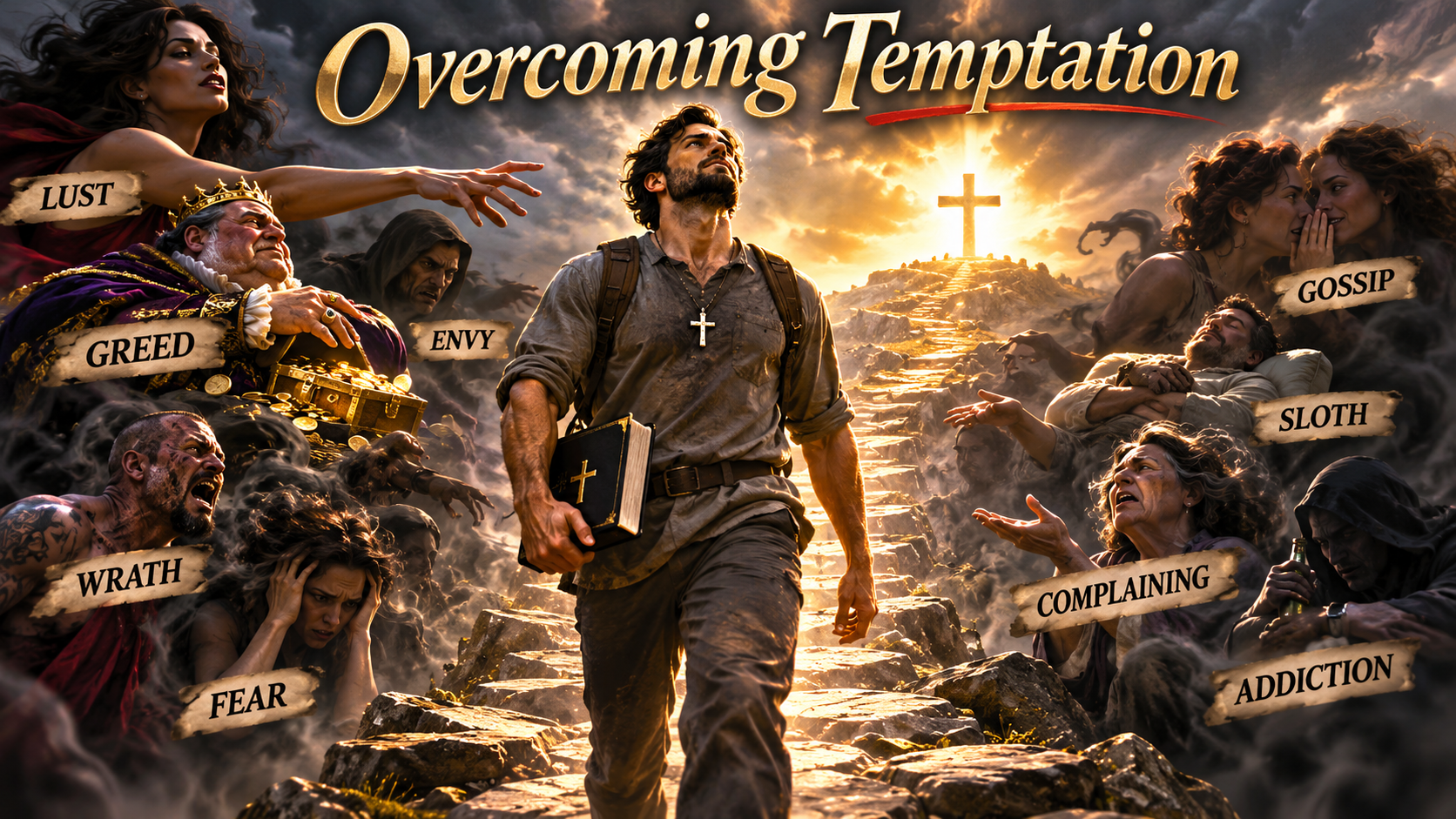
Every Christian faces temptation. It may not always appear in obvious forms, and it may not always come with loud warning bells. Sometimes temptation shows up as fear, worry, complaining, gossip, anger, unbelief, or the quiet desire to excuse something God has already called sin.
James 1:2–8 and 12–25 gives believers a clear, practical, and biblical way to understand temptation. James moves from outward trials, to the inward battle of desire, to the necessity of obeying the Word of God. The Christian’s victory over temptation is not found in self-confidence, emotion, or willpower. It is found in patient faith, single-minded prayer, a guarded heart, and obedient submission to Scripture.
What Is Temptation?
Temptation is the pull or pressure to sin. It usually works through a desire in the heart, drawing a person away from God’s will and toward disobedience.
James explains it plainly: “Every man is tempted, when he is drawn away of his own lust, and enticed” (King James Bible, Jas. 1:14). Temptation itself is not sin. Sin happens when the desire is welcomed, entertained, followed, and acted upon.
This distinction matters. Jesus was tempted in the wilderness, yet without sin. He did not entertain evil, reason with it, or make room for it. He answered temptation with the Word of God and resisted it from the beginning.
Christians often think of temptation only in terms of the “big sins”—lust, fornication, gluttony, gambling, drunkenness, or other outward sins. But Scripture also exposes subtler temptations: fear, lack of faith, gossip, complaining, anger, and worry. These may appear acceptable or ordinary, but if they move the believer away from obedience to God, they must be treated as temptation.
I. Receive Trials as God’s Work of Maturity
James begins with a surprising command: “My brethren, count it all joy when ye fall into divers temptations” (King James Bible, Jas. 1:2). This does not mean the Christian enjoys pain, hardship, or pressure. It means the believer interprets trials by faith instead of feeling.
Feelings change quickly. A person may feel strong when the bills are paid, the stomach is full, and life is comfortable. But when pressure comes, emotions shift. That is why trials must not be interpreted by feelings. They must be interpreted by the Word of God.
James says that “the trying of your faith worketh patience” (King James Bible, Jas. 1:3). God uses trials to expose what is real, strengthen what is weak, and mature the believer. The pressure reveals whether faith is merely spoken or actually lived.
When temptation comes through hardship, the Christian should ask: “What is God producing in this trial?” The answer may not always be immediate, but James teaches that God is working patience, maturity, and completeness in His people.
Ask God for Wisdom
James continues, “If any of you lack wisdom, let him ask of God” (King James Bible, Jas. 1:5). Trials often reveal how little wisdom we have. Pressure can cloud judgment. Temptation can make sin look reasonable. Fear can make obedience seem impossible.
The answer is prayer. The believer is commanded to ask God for wisdom, trusting that He gives liberally. But James also warns against double-mindedness. “A double minded man is unstable in all his ways” (King James Bible, Jas. 1:8).
The Christian cannot overcome temptation while trying to hold on to two loyalties. He cannot ask God for wisdom while secretly planning to follow his own lust. Wisdom must be asked in faith, with a heart willing to obey whatever God reveals.
II. Resist Temptation by Guarding the Heart
James makes it clear that temptation must not be blamed on God. “Let no man say when he is tempted, I am tempted of God” (King James Bible, Jas. 1:13). God may allow testing, but He does not entice anyone to evil. God is holy, pure, and unchanging.
The source of sinful temptation is inward lust. James gives the process: desire draws, entices, conceives, brings forth sin, and sin brings forth death. Temptation is not random. It follows a spiritual progression. What begins as a desire in the heart can become an action, then a habit, then a destructive pattern.
This is why Proverbs says, “Keep thy heart with all diligence; for out of it are the issues of life” (King James Bible, Prov. 4:23). The heart, biblically speaking, is the inner seat of thought, desire, emotion, intention, and will. What happens in the heart shapes the choices of life.
A believer must therefore ask: “What desire in my heart is pulling me away from obedience?” This question is uncomfortable, but necessary. Temptation often finds strength in areas we have not surrendered to the Word of God.
Do Not Build an Identity Around Sin
One of the most dangerous responses to temptation is to say, “This is just who I am.” A person may think, “I will always be this way. I cannot change. I must yield to this desire.” But that is not how Scripture identifies the believer.
The Christian is a new creature in Christ. He is not defined by the old man, old habits, or old sins. Paul repeatedly addressed believers as saints, even when correcting serious problems in the churches. Their conduct needed correction, but their identity was rooted in Christ.
When facing temptation, the believer must remember who he is. He is a child of God. He has the mind of Christ. He has the indwelling Holy Spirit. He has the Word of God. He is not helpless before temptation.
The Word of God cuts through the lies of the flesh. It exposes the heart and casts down arguments that rise against God. The believer’s feelings may lie, but the Word of God tells the truth.
III. Respond to the Word With Obedient Action
James does not stop with hearing truth. He commands obedience: “But be ye doers of the word, and not hearers only, deceiving your own selves” (King James Bible, Jas. 1:22).
Hearing without obedience is self-deception. A person may listen to sermons, read Scripture, and agree with truth, yet still refuse to act. James compares that person to a man who looks in a mirror, sees his condition, walks away, and forgets what he saw.
The blessing is not promised to the forgetful hearer, but to the obedient doer. The Christian must ask: “What does the Word require me to do right now?” Not later. Not in theory. Not someday. Right now.
Obedience turns faith into action. Knowledge alone is not enough. Information must become submission.
Move Forward in Obedience
Exodus 14 gives a powerful picture of this truth. Israel stood before the Red Sea with the Egyptians behind them. Moses told the people to fear not, stand still, and see the salvation of the Lord. Then God said to Moses, “Wherefore criest thou unto me? speak unto the children of Israel, that they go forward” (King James Bible, Exod. 14:15).
There was a time to listen, and then there was a time to move. God had spoken. The people had to act.
The same principle applies to temptation. Pray, ask God for wisdom, search the Scriptures, and then obey. If God has shown the next step, take it. If the Word says flee, flee. If it says confess, confess. If it says forgive, forgive. If it says be silent, be silent. If it says put away sin, put it away.
Sin Lies at the Door
Genesis 4 gives another sobering picture. Cain was angry when God did not respect his offering. God warned him: “If thou doest well, shalt thou not be accepted? and if thou doest not well, sin lieth at the door” (King James Bible, Gen. 4:7).
Sin is pictured as crouching at the door, desiring Cain. That is how temptation works. It draws near. It waits. It invites. It tries to move the heart a little closer, then a little closer, until desire becomes action.
James describes the same process. Lust conceives and brings forth sin. Sin, when finished, brings forth death. Sometimes that death may not be immediate physical death, but it always produces spiritual damage: hardness, bondage, corruption, shame, and distance in fellowship with God.
Walk in the Spirit
Victory over temptation does not come from mere willpower. It comes by walking in the Spirit. Galatians teaches, “Walk in the Spirit, and ye shall not fulfil the lust of the flesh” (King James Bible, Gal. 5:16).
The believer has the Holy Spirit. He has access to the fruit of the Spirit: love, joy, peace, longsuffering, gentleness, goodness, faith, meekness, and temperance. When temptation comes, the Christian can ask, “What would obedience look like right now? What would a Spirit-led believer choose?”
There may be wrestling. There may be good days and hard days. But the believer is not fighting as a slave to sin. He is resisting as one who belongs to Christ.
Temptation Reveals the Condition of the Heart
Temptation exposes what is inside. Like pressure placed on a machine, trials reveal where the cracks are. God does not tempt His people with evil, but He may allow pressure that reveals what needs to be strengthened, corrected, confessed, or surrendered.
When a believer fails, he should not excuse the sin or despair in shame. He should confess it, return to the Word, and allow the Holy Spirit to work in that exposed area. The goal is not condemnation. The goal is conformity to Christ.
Over time, temptations that once ruled the believer can lose their power. The Christian grows. Patience matures. The Word takes root. The Spirit strengthens obedience. Then the believer can help others who are facing similar battles.
Keep Eternity in View
James says, “Blessed is the man that endureth temptation: for when he is tried, he shall receive the crown of life” (King James Bible, Jas. 1:12). The believer endures by looking beyond the present moment.
The present temptation may feel strong, but it is temporary. The promises of God are eternal. The Christian has a glorious future: resurrection, a glorified body, eternal fellowship with Christ, and reward from the Lord.
This eternal perspective strengthens obedience. The passing pleasure of sin cannot compare to the goodness of God, the joy of holiness, and the crown of life promised to those who love Him.
Conclusion
James 1 teaches that temptation reveals the condition of the heart. Trials can mature faith, but lust can destroy when it is entertained. God remains holy, generous, and unchanging. His Word gives life, exposes the heart, restrains wrath, and directs obedience.
The Christian who endures temptation must not merely hear truth, but continue in it. Faith must become action. The blessed life belongs to the believer who receives the Word meekly, obeys it faithfully, and loves God more than the passing promise of sin.